Wednesday, 20 June 2012

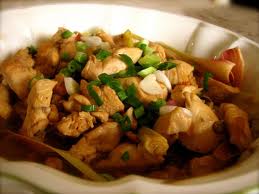
Filipino Chicken Adobo


SmartCooks here.  

Summer arrived officially at 7:09 p.m. today, June 20, 2012.  Its arrival coincided with the start of a trio of 'Triple H' days -- hot, hazy, humid -- in the Nation's Capital.  The weekly Wednesday noon yoga session held on Parliament Hill was a good intro to the bikram (hot, sweaty) style of yoga.  

Basically, not weather for cooking except perhaps a light meal late in the day .... so chicken jumped to mind and the perfect opportunity to continue my global tour of national signature chicken dishes.  Today the Philippines Chicken Adobo joins the ever-growing list of low-fat chicken dishes from China, Thailand, Malaysia, Morocco, Sri Lanka, Korea and Japan. 

Origins of Chicken Adobo dishes:

Chicken Adobo is the traditional, national Filipino Chicken dish.  It is amazingly simple to prepare, basically chicken braised in soy sauce, vinegar, and garlic.  Rasa Malaysia does a wonderful of showing off the final dish (compliments of 80 Breakfasts), with its sweet-and-sour aroma.  

'Adobo' is a Spanish word for seasoning or marinade.  Some history texts say that when the Spanish arrived in the Philippines in the late 16th/early 17th century, they found a cooking process that involves cutting up a whole chicken, marinating the meat in vinegar and garlic, browning in oil and garlic, and simmering for an hour or more until soft in the marinade.  Dishes prepared this way became known as 'adobo'.   

Adobo style cooking was a preferred method for cooking because the cooked meat kept well without refrigeration as the vinegar helps to inhibit the growth of bacteria.  

Making Chicken Adobo* (Note vegetarian option below) 


Various cooks extol the versatility and adaptability of this dish.  For example, some use primarily dark meat from chicken legs and thighs, while others use all parts of the chicken. I prefer chicken breasts (heresy but MINUS the skin), recognizing that I may lose some of the depth of flavour but, for me, it's the leaner, lower fat protein that I use. 


If you use chicken legs and thighs, I suggest taking the extra time to remove as much fat as possible.  The slow cooker is also an option and there are recipes for cooking it this way at the Perfect Pantry.  


There is no exact science in terms of the ratio of vinegar and soy sauce to be used.  Generally, cooks suggest 60/40 (i.e, 60% vinegar and 40% soy sauce).  Recipes experiment with vinegars.  Most suggest white vinegar; some use unseasoned rice vinegar or apple cider vinegar.  If red wine vinegar is used, a richer, deeper taste results.  I prefer low-sodium soy sauce but again it is up to individual preference (and sodium sensitivities).


I have also adapted the recipe by adding ginger, pearl/sweet onions or star anise into the sauce.  Bottom line, variations are your choice! 


Chicken Adobo:
Ingredients:
1/2 cup white vinegar or rice or cider vinegar 
1/4 cup reduced sodium soy sauce 
3-4 lbs of chicken (any combo of chicken legs, thighs, breasts) 
1 tsp whole black peppercorns
3-4 cloves garlic, depending on preference can do more, slightly pressed  
1 yellow onion, cut into 8 wedges 
1/2 cup water (may need slightly more) 
2 bay leaves
2 T olive oil 
Fresh pepper 


Directions:
Three basic steps: 
1) Marinating:  Prepare the chicken by cutting off any visible fat and pricking the meat to let the marinade penetrate the meat.  In a large bowl, mix the soy sauce, vinegar, black peppercorns, garlic, onion, bay leaf and chicken pieces, then marinate for 2-3 hours in the refrigerator.  Remove chicken pieces and set marinade aside.  
2) Browning:  Heat olive oil in a pan and sauté marinated chicken pieces until the chicken is light brown.  Discard any fats that emerge.  
3) Cooking:  Put the chicken, marinade and water into a pot, cover and bring to a boil. Reduce heat, remove cover, and simmer for 40-50 minutes until the chicken become tender (can pull it away from the bone easily),  and sauce is thickened and reduced.  


The dish improves by resting for a bit.  Season with salt and fresh pepper as desired.  Can garnish with scallions.  Enjoy with quinoa or rice.  

* Vegetarian Option:  Tempeh Adobo 


Since adobo is a method of cooking involving the pillars of vinegar, soy sauce, garlic and pepper, it can easily be done with a variety of vegetables and/or tofu and tempeh.  One recipe, for example, used 6 cups of cut up eggplant and adjusted cooking times.  


Another recipe mimicked the 'chicken' look by using a tempeh block.  That recipe can be found here.

Thursday, 7 June 2012

All-Occasion Rhubarb Crumble Cake

SmartCooks here. 


I've been looking for another cake-ish dessert that I would feel comfortable making, serving, taking to potlucks, and, of course, eating.  It will always be something with fruit; I have never been fond of making or eating the double chocolates whatever.  Given a choice, dessert is all about fruit -- on its own, crisped, crumbled, scattered, triple berried .. whatever.  It's all good.  


So, after some research, I have found an all-occasion Rhubarb Crumble Cake, inspired by Smitten Kitchen.  That now makes two cake-ish desserts in my repertoire (Apple Charlotka was previously posted).  Certainly still a long way from the BH cake-making expert level.  Fondant anyone? :)

Smitten Kitchen clearly loves making 'every day cakes', as Deb Perelman calls them. She has posted many delightful recipes and photos for single layer cakes/crumbles ranging from Raspberry Buttermilk cake (blueberries, blackberries, etc work equally well, May 19, 2009) to Blueberry Boy Bait Cake (July 6, 2009), ? not sure genesis of name but it is a very handsome cake indeed).

Memories of Rhubarb


Rhubarb appeals to me because it represents early memories from my childhood.  Our first house was in central London, Ontario, on a small (and it now seems very small) street just off a busy road.  We lived there from pre-school up until senior years of high school, We moved first to the small house pictured left (hey siblings it's for sale!) and then, as the family grew, we moved next door into a larger house (with an apple tree!).


What I remember most about the first house was the rhubarb patch behind the garage, which was on the left side and now seems to be gone).  It was a small hidden area with lots of rhubarb.  


I knew every inch of that patch; voracious reader that I was I would take a stack of books from the local Bookmobile! Library, hide out among the rhubarb away from siblings and housework and read and nibble on raw rhubarb stalks.  When the rhubarb was ready I'd pick a bunch and my mother would make stewed rhubarb or rhubarb pie.  Nothing better.  

Rhubarb was everywhere in the old neighbourhood.  Most impressive was the house behind ours with a very large patch, tended by an elderly couple who grew everything they needed -- vegetables, rhubarb, corn, gorgeous flowers and even some fruit.  Kids being kids.... we'd hit baseballs or whatever into their garden and crawl through the fence to retrieve them.  When that happened, one of them would come flying out the back door or off their back verandah brandishing a broom and screaming at us -- loudly -- to get out.  Terrified we would retreat (but not for long).  Years later as ill-health forced them out of gardening, I apologized to them for our behavior.  They were just trying to protect their investment in their food crop.  


All-Occasion Rhubarb Crumble Cake


I experimented with using different kinds of sugars and flours in an effort to lighten it up calorie- and health-wise.  The end result was both tart and sweet so I think I succeeded.  


For example, instead of using white, refined flour in the cake and topping, I substituted a mix of almond and whole wheat flour.  It worked fine.  I also used a light hand on the sugar, and a heavy hand on lemon zest and juice.  No problem.  


Ingredients for Cake:
(Inspired by many, including Smitten Kitchen, Martha Stewart and Lucy Waverman, adapted by me)


1 1/4 lbs red, ripe rhubarb, cut into 1/2-inch lengths on the diagonal
1 1/3 cup granulated sugar, divided
1 T lemon juice
1/2 cup unsalted butter, softened
1/2 tsp finely grated lemon zest
2 large eggs
1 1/3 cups flour (white or whole wheat or experiment)
1 tsp baking powder
3/4 tsp table salt
1/4 tsp ground ginger
1/3 cup low-fat sour cream


Ingredients for Topping:
1 cup flour (white or whole wheat or experiment)
1/4 cup light brown sugar
1/8 tsp table salt
1/4 tsp ground cinnamon
4 T unsalted butter, melted


Directions:


Make the cake: 


Preheat oven to 350°F. Coat the bottom and sides of a 9x13-inch baking pan with Pam cooking spray, then line the bottom with parchment paper, extending the lengths up two sides. 


In a small bowl, stir rhubarb, lemon juice, and 2/3 cup sugar and set aside. 


In another bowl, beat butter, remaining sugar and lemon zest with an electric mixer until light and fluffy. Add eggs, one at at time, scraping down the sides after each addition.  In a third small bowl, whisk together flour, baking powder, 3/4 tsp table salt and ground ginger. Add one-third of this flour mixture to the butter/sugar/lemon zest batter, mixing until just combined. Continue, adding half the low-fat sour cream, the second third of the flour mixture, the remaining sour cream, and then the remaining flour mixture, mixing between each addition until just combined.


Pour batter into prepared pan in an thin layer. Pour the rhubarb mixture over the cake, spreading it into an even layer.


Make the topping:


Stir together the crumb mixture by whisking the flour, brown sugar, table salt and cinnamon together, then stirring in the melted butter.  Scatter evenly over rhubarb layer. 


Bake cake in preheated oven for 50 to 60 minutes until top becomes golden and tester comes out clean.  Cool completely in the pan on a rack.


Cut into 2-inch squares.  Cake will keep for a few days at room temperature, or in the fridge, or it can be frozen (I did!).


Sunday, 27 May 2012

Grilled Thai Chicken Breasts and Roasted Vegetables with a Walnut Dressing

SmartCooks here.


Ah, yes, Saturday.  'Twas indeed glorious.  The Main Street Farmer's Market was packed with fresh, local asparagus and other leafy and local vegetable offerings.  

It was also Ottawa Race Weekend, and tens of thousands of fit folks ran in fine form almost past our front door in their 5, 10, half or full marathon quests.  I used to do the 10 km race every year (50 minutes was my best time so I'm not exactly fast).   Alas, I haven't run in the past few years but would love to do so again.

I digress.  In addition to Ottawa Race Weekend, Saturday was the perfect weather opportunity for an impromptu back deck BBQ with friends, and some healthy, Asian, low-fat and in-season, local food.  I pulled out Thai-Inspired Grilled Chicken Breasts and Roasted Spring Vegetables with a Walnut Dressing.  


I put photos of both of these dishes on my Pinterest boards as 'Recipes to Try' and they were immediately repinned by dozens of people who had the same thought -- interesting to try soon. Saturday night was my go at them.   Both are originally from Food and Wine magazine and adapted by me to reflect local vegetable offerings and tastes.  


Perfect Frying Pan for Roasted Vegetables 

The chicken went on the grill but the vegetables were cooked to perfection on the gas stove in a brand-new monster-sized 16" frying pan (similar to the one pictured on the right), a 25% off treasure I picked up at Paradis, the perfect (amateur and professional) chef's paradise/store.  


The frying pan almost covers two burners but is perfect for cooking vegetables because the quicker cooking ones can be easily moved to the back of the pan sitting on the second burner.  It's also a breeze to clean, always a bonus for me.  I can't count the number of woks I've ditched over the years because they rusted despite lots of seasoning.


Wild French Asparagus for Roasted Vegetables 


Also on Saturday, I walked into the local organic food produce store, Herb and Spice, to find a front counter display of local asparagus.  And, then, alongside it was a sign saying 'Wild French Asparagus'.  The price was of course almost triple that of a local bunch.  Ever curious, I decided to try one.  


Wild asparagus is a cousin of the cultivated kinds.  It is thinner and longer and has a delicate flavour.  It does not take long to cook or stir fry.  It was made famous by a book called "Stalking the Wild Asparagus" that was written in the 1960s.  Wild asparagus is difficult to find, primarily on coastal dunes and cliffs of the UK and Western Europe, including Ireland, the Channel Islands and Northern Spain, France, Belgium, the Netherlands and North-West Germany.  It's an endangered species and steps are underway to conserve it, grow it carefully and use it sustainably.  


All in all, a welcome, interesting addition to a spring vegetable stir-fry. 


Thai-Inspired Grilled Chicken 
(Inspired by Food and Wine but adapted) 

Ingredients:

3 T unseasoned rice vinegar
1/4 cup sugar
4 tsp minced garlic, or can do a bit less depending on taste
2 tsp crushed red pepper
1/4 cup soy sauce
2 tsp finely grated fresh ginger
1 1/2 tsp Asian sesame oil
Four 6-ounce skinless, boneless chicken breasts, pounded to a 1/2-inch thickness (organic, hormone free, if possible) 
Lime wedge (to garnish)


Directions:

In a small saucepan, mix the rice vinegar with the sugar and cook over moderate heat, stirring, until the sugar dissolves. Add 1 tsp of the minced garlic and the crushed red pepper and let cool.

In a large bowl, combine the rice vinegar/sugar mixture with the remaining 3 tsp of garlic and the soy sauce, ginger and sesame oil. Add the chicken to the marinade in the bowl and refrigerate for at least 1 hour or overnight.

Light a grill and bring to medium-high heat (400 degrees). Remove the chicken from the marinade and let it drain, then grill for about 2 minutes per side, until browned and cooked through. Transfer the chicken to a cutting board and let rest for 5 minutes. Cut the chicken into half and arrange on a platter, with the lime and roasted vegetables (see below).


****** 
Roasted Vegetables with a Walnut Dressing

(Serves four) 


Ingredients:

2 zucchini, sliced diagonally 1/3 inch thick
1/2 lb shiitake mushrooms, stems cut off
1/2 lb thick asparagus, peeled
1/2 lb French asparagus (optional)
1 red onion, sliced 1/3 inch thick

1 red pepper, sliced
1 sweet potato, boiled, and cut into chunks
Other vegetables, your choice

Sea salt and freshly ground black pepper 

Ingredients for Walnut Dressing:

1 cup walnuts
1 small shallot, finely chopped
1 tsp thyme leaves

1 T freshly squeezed lemon juice
1/2 tsp finely grated lemon zest

1/2 cup olive oil 
Salt and pepper

Directions:


Preheat the oven to 350°, put a small amount of olive oil in the frying pan and warm it to medium-high.  Peel skin from the sweet potato and parboil it for 15-20 minutes in a pot of boiling water.  Check for doneness as it does not have to be completely soft.  Rinse well and cool. 


Brush the zucchini, mushrooms, asparagus, red pepper, cooled sweet potato and red onion with olive oil and season with sea salt and pepper. Stir fry the vegetables and potato in the frying pan over medium-high heat, turning occasionally, until lightly charred in spots and tender, 15 to 18 minutes. As each one is done, transfer to a serving platter.

Meanwhile, spread the walnuts in a pie plate and toast in the oven for about 12 minutes, until fragrant. Let cool completely.  Put the toasted walnuts in a food processor. Add the shallot, thyme, lemon juice, lemon zest and 1/2 cup of olive oil and pulse until the nuts are coarsely chopped. Season the dressing with salt and pepper.  


Arrange vegetables, sweet potato and chicken on a platter. Place the walnut dressing in a small bowl in the centre of the platter.  


Thursday, 24 May 2012

SmartCooks Energizes with Umami Otsu Soba Noodle Salad

SmartCooks here.  


Umami Otsu Soba Noodle Salad was missing from my life .... but no longer.


The mission for the week was to find food that packs an umami energy burst and is not too complicated to assemble or heavy to digest. I'm still recovering from a viral lung infection that flattened me for a week and I'm aiming to get energy levels back to where they where. Umami Otsu Soba Noodle Salad definitely fit the recovery bill. 

Otsu Soba Noodle Salad


I'd never heard of 'Otsu' before my research. 'Otsu' in Japanese apparently means 'quaint, stylish, spicy, chic, tasty, romantic' ... and it fits this dish.  It's made with buckwheat soba noodles served hot or cold (the cucumber adds to cool). The sauce is a blend of smooth and spicy -- ginger, tahini, lemon, soy sauce, and Sriracha mixed with cucumber, cilantro, scallions and tofu.  I added shiitake mushrooms and eggplant for vegetables. 


Food bloggers have been writing about Otsu for years.  Heidi Swanson (at 101 Cookbooks) first found the dish in 2004 in Northern California at Pomelo Restaurant where it remains on the menu today.

She was so impressed with it she wrote about it on her Food Journal blog and included it in her stylishly designed and photographed cookbook, Super Natural Every Day, which was published in 2011.  

She describes the dish as "unlike many pasta recipes that leave you feeling weighed down and sluggish, (Otsu Noodles) makes for a healthy, invigorating, and energizing meal that will quickly become a favourite.” She recommends using Nigari tofu but I couldn't find that type of tofu so substituted extra firm tofu instead.  

Chef Michael Natkin was also inspired by 101 Cookbooks. On his blog, he writes that the recipe:  "made me leap out of my chair and turn the refrigerator inside-out to see what I was going to put in the version that most definitely had to be made right now." 

In Herbivoracious he ramps up the spiciness factor by adding more lemon zest, lemon juice (or yuzu or lime), a Balinese long pepper, and Sriracha to the sauce. Unfortunately, I couldn't find Balinese long peppers in Ottawa so substituted a few black peppercorns. (But I ordered on-line for next time!)   For more umami, he suggests adding miso, wasabi or garlic.  I intend to try these in the next few times I make the dish.   

Anyway, both versions of Otsu Noodles -- 101 Cookbooks and Herbivoracious -- are excellent energizers with umami oomph.  The sauce is simply divine.  The first time I cooked and ate it, I was sitting with my husband and watching re-runs of Murphy Brown and Bob Newhart on Deja TV.  I kept saying, "This is simply the BEST dish I've enjoyed in a long, long time!" 

Hope you think so as well.  Try it and Enjoy!    

SmartCooks Umami Otsu Noodle Salad  
(Inspired by 101 Cookbooks, Herbivoracious and a pix from Behind the Skillet) 


Ingredients:

(For the sauce):

1/4 cup tahini
2 T tamari or soy sauce (shoyu if you have it)
1 T sweet soy sauce or 2 T
 sugar 
2 T brown rice vinegar (or unseasoned rice wine vinegar)
Zest from 1 lemon (or yuzu or lime) 
Juice from 1 lemon
1 inch piece of ginger, peeled and grated
1 T Sriracha or 1/2 T cayenne pepper (more if more spiciness is desired)
Sea salt and black pepper
1 piece of Balinese long pepper, crushed (or a few black peppercorns)
2 T olive or sesame oil (optional, if needed) 

(For the noodles):
12 ounces soba (Japanese buckwheat noodles)
1/2 English cucumber, cut into strips and then 1/2" pieces
12 ounces extra firm tofu (if you find Nigari... the best)
1/4 cup fresh cilantro
4 green onions, sliced thin (more or less depending on taste)
1/3 cup toasted sesame seeds
Sea salt


(For the vegetables):
A handful of shiitake mushrooms and eggplant, cut into pieces
Lettuce for serving, if desired
Directions:

Whisk all of the dressing ingredients together, and let it sit for flavors to develop while you make the noodles and vegetables.  If the sauce is too thick, a bit of olive or sesame oil will help ensure the desired consistency.

Prepare the noodles. For me that meant rapidly boiling the buckwheat noodles for 4 minutes in salted water. Don’t let them overcook. Rinse in cool running water.

Thoroughly pat dry the tofu and slice into approximately 1" long rectangles (1/2" thick), and saute in a single layer with a bit of olive oil over high heat until nicely browned and golden on both sides.
Saute the mushrooms and eggplant in the frying pan with a bit of olive oil until brown and crisp. 
To assemble the dish, in a large bowl, toss together the noodles, dressing, cilantro, cucumber, tofu, sesame seeds (reserving 1 tablespoon) plus the shiitake mushrooms and eggplant. 

Serve on a platter and garnish with remaining 1 T sesame seeds, green onions, and a couple of pinches of sea salt and black pepper.  Can also serve it on lettuce, if desired. 

Thursday, 17 May 2012

Shakshuka (poached eggs and tomatoes) for Victoria Day Weekend Brunch: A Culinary Icon of Middle Eastern Cuisine

May 2012


SmartCooks here.  

Victoria Day weekend is almost here! Here's a perfect brunch idea perfect for you and guests.  It's a dish called Shakshuka (translated literally as 'mixed up') or basically poached eggs in tomatoes spiced to your liking.

Shakshuka is a low-carb, low-fat, vegetarian, gluten-free, Kosher, easy-to-make, inexpensive, all-round healthy breakfast, brunch, or lunch to enjoy at some point on this long weekend.  I found it in Vegetarian Times and realized I had seen it on other sites as well, like Smitten Kitchen and Saveur

'Shakshuka':  Culinary Icon of Middle Eastern and North African Cuisine

I'd never heard of Shakshuka until reading the current issue of Vegetarian Times.  Research about its roots is a bit muddled.  Everyone seems to claim it as their own.  Some say it originated in Turkey; others say it arrived in the Middle East by way of Libya.  Whatever... today it's an integral part of the fabric of Middle Eastern cuisine, with many bloggers waxing on about the divine meal of Shakshuka they had in Israel or at a Tripoli-based restaurant called Dr. Shakshuka.  In Hungary, the recipe adds lots of paprika. Traditionally, it was a dish made by the men of the household (fine by me if there's one who would like to take it on!).

The key components of the dish are:


- Fresh Tomatoes!  Roma or plum tomatoes are specified in many recipes.  Other recipes called for canned or crushed tomatoes.  I ignored the latter in favour of fresh.  Always fresh if at all possible;  

Spices for a little or moderate 'kick'.  In addition to onion, garlic, and peppers, cooks add a variety of cumin or chili powder, chilies (like a jalapeno. cayenne or Anaheim), red pepper flakes, tumeric, or paprika;

Farm Fresh Eggs.  Cracked on top of the tomato mixture, cooked on the stove top or browned in the oven.
 
The sauce can be made in advance to cut down prep time and then reheated.  The dish also has a wide variety of extras and sides.  It is almost always garnished with (flat leaf) parsley or feta (optional) and served with bread or pita. Often it is served in its own skillet hot from the oven broiler. 

My favourite recipe is adapted slightly from Vegetarian Times (below), with 151 calories per serving, 9 grams of protein, 15 grams of carbs and low sodium (unless you ramp up the salt!). 


Shakshuka
Serves 4 people 

Ingredients:
1.5 tsp olive oil
 1 medium yellow onion, chopped (about 1 1/3 cup)
 1 red bell pepper, diced (about 1 1/3 cups)
1 jalapeno chili, chopped (about 3 T)
 2 cloves garlic, minced (about 2 tsp)
 8 Roma tomatoes, diced (about 4.5 cups)
 ½ tsp ground cumin
1 tsp paprika (a pungent Hungarian paprika if you want more heat)
 1 T tomato paste
4 large eggs
 3 T chopped parsley
Fresh salt and pepper

Directions:

Heat oil in skillet over medium heat.  Add onion and bell pepper and sauté 7-9 minutes. 

Add jalapeno, garlic and sauté 1 minute more.  Add tomatoes, cumin, paprike and season with fresh salt and pepper. Cover and cook 2 minutes.  Uncover and cook 6-8 minutes, or until mixture thickens. 

Stir in tomato paste, and cook 1 minute more. Reduce heat to low. 

Make 4 cavities in the tomato mixture with a spoon.  Break 1 egg into small dish, and slip into cavity.  Repeat.  Cover and cook 8-10 min, or until egg whites are set. 

Sprinkle with parsley.  Serve with a variety of extras, like warm pita, feta etc. 

Tuesday, 8 May 2012

Spicy Vietnamese Lemongrass Chicken (Ga Kho Xa Ot)

May 2012

SmartCooks here.  


You may have figured out by now that I like to try interesting chicken recipes from around the world.  I don't experience them directly in their country of origin, but I'm quite comfortable surfing the net, blogs, books, etc, researching the most authentic version available, cooking it, and recording my finds.  It's been a delightful journey so far.  

Today's chicken dish is (Spicy) Vietnamese Lemongrass Chicken (Ga Kho Xa Ot).  This dish was prompted by the cold weather and a search for comfort food, especially curry.  Anytime I get to use the Sri Lankan white curry from Spice Hunters (I've written about them before) is a bonus.  Double bonus is to use lemongrass! 


The Key to Ga Kho Xa Ot


From research, a true Vietnamese kho is a savory-sweet dish simmered in a caramel-based sauce.  Traditionally it is prepared in a clay pot (I didn't).  Of course, there are many variations of kho dishes with different types of proteins.  This one is chicken quickly braised with lemongrass and chili peppers. 


The Ga Kho Xa Ot dish is renowned for its combination of salty and sweet from the fish sauce (or soy sauce if not keen on fish sauce) and caramel sauce.  The addition of lemongrass adds a wonderful aroma to the dish, with the spicy chili peppers providing a balance to the sweetness. 


The only new issue for me was caramelizing the sauce.  I had no difficulty getting the sugar into a deep amber colour, adding a bit of water and then removing from the heat.  However, after a few minutes, it had really caramelized to the bottom of the skillet. I solved it by adding a bit more water and putting it back on the heat for a minute when I was ready to use it.  I noticed other recipes didn't remove it from the heat and quickly added in other ingredients.  Experiment to see what works best.  


Serving Suggestions


There are endless serving possibilities of course.  My favourite is to serve it over a mix of quinoa and Israeli couscous.  Various kinds of rice are always a favourite.  Steamed vegetables, ranging from broccolini, carrots to cabbage, have been noted in recipes I checked.  Lots of scallions (both the white and green parts) and cilantro would help round it out.  


Ga Kho Xa Ot -- Spicy Vietnamese Lemongrass Chicken
(Originally Food and Wine, 2007, and Rasa Malaysia, 2012)


Ingredients:


1 1/2 lbs chicken breasts (preferably skinless, organic), cut into bite-size (1 1/2 inch) pieces
2 T canola oil
1 T curry powder (your choice on strength)  
3 garlic cloves 
1/2 tsp salt
2 T plus 1 1/2 tsp sugar 
2 T fish sauce (or soy sauce)
3 lemongrass, inner white bulbs only, crushed and minced 
3 T water 
1 shallot, minced  
3 Thai green chlies, sliced
2 scallions, for garnishing, or your preference, white and green parts
Cilantro (optional for garnish) 


Directions:


In a bowl, combine the fish (or soy) sauce, garlic, curry powder, salt, and 1 1/2 tsp of the sugar. Add the chicken to coat and set aside.


In a small skillet, mix the remaining 2 T of sugar with 1 T of water and cook over high heat, stirring until the sugar is dissolved. Cook without stirring until a deep amber caramel forms. Remove from the heat and stir in the remaining 2 T of water. Transfer to a bowl.
Heat a wok over high heat. Add the canola oil and heat until shimmering. Add the lemongrass, shallot, and chilies and stir-fry until fragrant. Add the chicken and caramel and stir-fry until the chicken is cooked through and the sauce is slightly thickened. Transfer to a bowl and top with scallions and cilantro if using.


Enjoy! 


Friday, 4 May 2012

Aside #24: Mr. Apple -- Get rid of creepy WOTD!

May 2012

I haven't posted an Aside for awhile.  Blame Mr. Apple for causing me a mini-meltdown.  Let me explain....
Last Saturday started out fine. 

Husband was away in BC visiting his daughter, her partner, and the new exceptionally cute dog! so I was on my own.  

As per the usual Saturday routine, I cleaned a bit, hit the gym for an aerobics class, shopped at the local health food store for dinner, and then settled down (with kitties) to stretch and enjoy a 'five-hanky' movie on the Women's Network TV.  My idea of a perfectly blissful day.

Ever the multi-tasker, as I was crying over Marley & Me  (***spoiler alert... the dog dies of old age***), I was also looking at books and surfing on my Mac laptop reading local media stories about a 'pervert' in the area molesting women.  I noticed that a copycat? pervert had entered a woman's house very near ours in the middle of the night, groped her, fled, and was caught just a few blocks away.  This of course prompted me to double lock the doors and to instruct the 3 cats snoozing on the couch with me to take shifts on watch duty. 

Hmm... Not.


At one point, I put aside the laptop to watch the end of the movie.  Minutes passed and the hankies piled up around me.  When I next looked at the idle laptop, I was transfixed by words floating eerily across the screen... Biblical'... 'Liturgical' ... 'Evangelist' ...  

As I watched, shocked, the words faded away into the background, to be replaced by the following message: "Satanism":  Press the D key to see more".

Freaked-out doesn't begin to describe my reaction.  It's midnight. I'm alone. I'm watching sobby movies and I'm brooding about weirdos in the area. Staring at the screen, I got a rush of ex-Roman Catholic fire and brimstone nightmares, jumbled up with scenes from The Omen and The Exorcist.  I felt invaded and violated by some malevolent cyber creep that was somehow watching me from my laptop.  

I immediately shut the laptop down and texted Husband and a close friend, both of whom are wayyyy more proficient with the technical side of computers than I am.  Both responded immediately to say they haven't heard of this before and agreed it was weird.  I went to bed and slept restlessly.  The cats, however, slept fine.

Next morning, my friend came over, carrying print with various cleaning programs we could run to turf the supposed virus lurking deep in the Mac heart. 

But first my friend looked at my sreen savers, scrolling through System Preferences, Desktop & Screen Saver, and then a list of Screen Savers (Flurry, Abstract, Cosmos, Forest and then.... wait .... Word of the Day). 

I quickly changed it off WOTD and ..... problem solved.   

Word of the Day.  Not even sure how it became the Screen Saver.  I don't remember choosing it.  But beyond that, what creepy Apple mind chooses words like 'Satanism' in this cyber-attack-infiltrated world? And what cosmic coincidence caused those words to flash across my laptop when I was alone and at my most vulnerable?  Grrrrr....

Mr. Apple, you need to edit the Word of the Day program and get rid of the sick humour.  I don't need that level of STRESS!