Sunday, 14 October 2012

Thai Chile-Lime Cashews

October 2012 

SmartCooks here.  For Thanksgiving dinner, you don't usually need much in the way of appetizers. This year Bon Appetit was featuring light appetizers and I found and tried Thai Chile-Lime Cashews.  They worked well, especially set out in cute little bowls in the living and dining rooms.  Plus a small bowl for the cook!  

I preferred making my own mostly because you can control the sodium level.  In this version you get only about one-third of what you find in store-bought versions.  Plus, this appetizer is super simple to make and cheaper than the packaged brands!  

I found all the ingredients, i.e., the dried chiles de arbol, ground ancho chiles and kaffir leaves at my favourite local, organic Herb and Spice store.  

Despite the chiles, this is not a super-spicy dish. The lime cools it off considerably.  To borrow a phrase ... Bet you can't eat just one!  Bon Appetit-izer! 

Ingredients: 
4 cups raw cashews (definitely unsalted) 
15 dried chiles de arbol, pix below
10 kaffir lime leaves cut in 1/4 inch slices
2 T melted unsalted butter
2 T vegetable oil (I used safflower) 
1 T kosher salt (or less... up to you) 
1.5 tsp ground ancho chiles (pix right) 
2 T finely grated lime zest 


Directions:

Preheat oven to 325°F. 

Combine cashews, dried chiles de arbol, kaffir lime leaves, unsalted butter, vegetable oil, kosher salt and ancho chiles in a large bowl and toss to coat.  Spread nut mixture in an even layer on a large rimmed baking sheet.

Roast, stirring occasionally, until cashews are evenly toasted, about 20 minutes. Let nut mixture cool completely on sheet on a wire rack. Transfer nuts to a large bowl and toss with the grated lime zest. 

This appetizer can be made up to 2 days ahead of the event and leftovers stored in a tight container at room temperature for awhile (I don't know for how long... they didn't last).

Monday, 8 October 2012

South Indian Beef Curry with Rice or Quinoa

SmartCooks here.

The Canadian three-day holidays are just fine.  Almost over though.  Darn.  I'm leaving on a jet plane again tomorrow... this time to Halifax and then C'Town, then next week across the country to various locations talking to the regional folks. Wish I had good news to impart ... tough six months ahead.  

As I expected with this new position ... month 3 ... blogging is difficult.  Cooking is difficult.  Eating healthy is difficult. Carving out 45 minutes 2x a week for Greco's personal training is difficult as is timing a rockin' Goodlife cardio class.  

To take back life, I found a delicious recipe in my Food and Wine app for South Indian Beef Curry with Rice.  I skipped the fragrant basmati rice in favour of a medley of quinoa (black, red, and white) mixed with a bit of leftover Israeli couscous.  The dish was a completely divine Saturday dinner-with-movie affair, definitely worth searching out boneless beef short ribs at the butcher and asking him or her to cut it into 3/4 inch slices or, better yet, cubes.  Saslove's Meat Market even found me local hormone ones, much to my delight.  No worries about any XL meat in my life.   

South Indian Beef Curry is super simple to prepare, a one-pot meal, that simmers for 90 minutes to end up a tender, well-blended, not too hot, meal.  It's a keeper.  All the spices can be found at whatever local version of a Herb and Spice you have in your area, including the dried Chili Peppers (left) that are a staple of mine for Thai and Indian curries.  

South Indian Cuisine

I did a bit of research to understand the style and characteristics of South Indian cuisine.  I couldn't possibly do it justice here but most sites seem to agree that most South Indian food is based on some type of rice, often eaten with a curry.  Food tends to have a generous, but balanced, amount of spices in both the vegetarian and non-vegetarian dishes of the region.  Tempering of dishes tends to include a mixture of oil, curry leaves, red chiles etc.  So... 

Enjoy! 

South Indian Beef Curry with Rice  

Ingredients:  

2 T canola oil
1 medium yellow onion, thinly sliced
12 fresh curry leaves (hard to find so I used dry) or 2 bay leaves
2 garlic cloves, grated
4 tsp finely grated and peeled fresh ginger 
1 T tomato paste (the tubes of tomato paste are fabulo), dissolved in 1/2 cup of water
2 tsp ground coriander 
1 tsp garam masala
1 tsp cayenne
1/2 tsp ground turmeric
4 small dried hot chiles
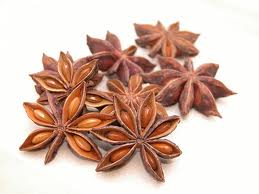
4 star anise pods (pictured, right) 
2 3-inch cinnamon sticks
1 3/4 lbs boneless beef short ribs, 
cut into 3/4 inch pieces 
Salt (I used kosher salt)

Directions:

In a heavy-bottomed or cast-iron casserole, heat the canola oil until shimmering.

Add the onion and curry leaves and cook over moderate heat until lightly browned, about 5-7 minutes. 

Add the garlic and ginger and cook until aromas develop, about 1 minute.

Stir in the tomato paste dissolved in water, along with the coriander, garam masala, cayenne, turmeric, dried chiles, star anise and cinnamon sticks.  

Add the ribs, season with salt and stir until coated with the spices.  Cover partially and cook over very low heat until the meat is tender, about 1 hour and 30 minutes.  

Spoon off any fat and discard the star anise, cinnamon sticks and any bay leaves, if using.  I also took out some of the dried chiles.

Serve over rice e.g., basmati or whole wheat.  Quinoa, Israeli couscous or any type of whole grain are always options.


Monday, 17 September 2012

Rosh Hashanah Heirloom Carrot Salad with Dates, Almonds and Herbs

September 2012

Happy Rosh Hashanah. Shana Tova to all.  To celebrate this high holiday, I made a quick, simple but very traditional sweet dish of "
Heirloom Carrot Salad with Dates, Almonds and Herbs," with thanks to Food 52  

To explain.... one of the real joys of this new job is getting to work with some of the best and brightest young folks who have joined the public service in the past decade or so.  Smart, enthusiastic, bright, young policy minds who work long hours on complex public policy issues that are aimed at bettering the lives of Canada's veterans.  It's a real pleasure.

There's hardly any time for chit chat on the job.  So, today, as one of the policy assistants was leaving the office, she wished me (and all of us), 'L'Shanah Tovah'. Well, that got our attention.  Say what? I asked.  The traditional greeting on Rosh Hashanah is apparently Shana Tova which in Hebrew means "A Good Year!".

Not that I would have known it but the Jewish New Year or High Holidays started at sundown September 16 and run until September 18.  It is an event believed to be the anniversary of the creation of Adam and Eve, the first man and woman.

Rosh Hashanah meals usually include apples and honey to symbolize a sweet new year.  I was sorely tempted to try Apple and Honey Challah (bread!) from Smitten Kitchen but it took more time than I have available.  Other temptations included 'Lekach' (or Jewish honey cake) and leek fritters called keftedes de prasa (I profiled those before on SmartCooks and highly recommend them). 

So, after a bit more research, I found a number of recipes involving carrots, which of course are known for being sweet.  "Heirloom Carrot Salad with Dates, Almonds & Herbs" was a perfect choice in terms of time and the ingredients i had on hand.  

The recipe is below.  Shana Tova Umetukah or "A Good and Sweet Year." Indeed! Enjoy. 

Heirloom Carrot Salad with Dates, Almonds & Herbs

Ingredients (Vinaigrette):

2/3 cups olive oil
1/3 cup walnut or grapeseed oil (I used grapeseed)
1/3 cup sherry vinegar 
1 T dark honey or maple syrup 
1 T lemon juice
1 shallot (minced)
1/2 tsp fresh thyme leaves
1 small garlic clove (minced)

Ingredients: 
Salad 

1 cup almonds, blanched (I used marcona)
1 tsp ground cumin
1 tsp lemon juice
1 T kosher salt
1 T confectioner's (icing) sugar
2 bunches heirloom carrots (mix of purple, orange, yellow, white) 
1/2 cup slivered dates
2 cups baby arugula
1 cup herbs (mix of mint, Italian parsley, purslane and any flowers like nastursium, if available).  I found some at the Lansdowne/Brewer Park Farmer's Market).
Salt and pepper

Directions:

Preheat oven to 350 degrees

First, toss almonds with cumin, lemon juice and salt, spread on a baking sheet and toast in the oven.

Once toasted, toss almonds with the confectioner's (icing) sugar. Crush almonds slightly with  a knife and put aside.

Vinaigrette:  Combine shallots, garlic, thyme, lemon juice, dark honey or maple syrup, salt & pepper and slowly whisk in oils till emulsified.  Taste, adjust seasoning.

Wash carrots, peel off first layer if necessary.  Set bowl of ice cold water in sink or on counter.  Using vegetable peeler continue to peel carrots down to the core creating ribbons, let carrot ribbons fall in to cold water to keep crisp. When all the carrots have are finished, drain and dry well.  Wash and dry arugula and herbs.  

To serve:  Combine carrots with two-thirds of the vinaigrette, almonds and dates and toss well.  Add arugula and herbs and add further vinaigrette to taste.


Applelicious PEI Apple-Pear Cake

September 2012

PEI Fall Flavours.  It is simply gorgeous in PEI these days ... warm sun, gentle evenings, signing of muted colours beginning to show in the trees.  The promise of fall to come.  

With fall come the 'fruits' of nature's bounty, including crisp delicious apples.  Applelicious indeed.  I couldn't resist.  I found myself buying a basket of apples and a smaller amount of pears and pulling together one of the best tasting, moist apple-pear cakes I have ever eaten. 


The recipe, adapted from A Taste of Home  includes the frosting, which I made for one batch (yeah!! delicious) but skipped for the second cake, preferring instead to garnish it with a mixture of raspberries, blackberries and blueberries.  I took the cake and berries to a marathon management retreat and ... wait for it, it helped us make it through the night.  

So here you go.  Enjoy.   

Apple-Pear Cake 
(Frosting Optional)

Ingredients

    2 cups shredded peeled tart apple
    2 cups shredded peeled pears (I used bosc pears)
    2 cups sugar
    1 1/4 cups canola oil
    1 cup raisins
    1 cup chopped pecans
    2 eggs, lightly beaten
    1 tsp vanilla extract
    3 cups all-purpose flour (I used Red Fife)
    2 tsp baking soda
    2 tsp ground cinnamon
    1/2 tsp ground nutmeg
    1/2 tsp salt

    Cream Cheese Frosting: (optional) 
    1 package (3 ounces) cream cheese, softened
    3 cups confectioners' sugar
    1/4 cup butter, softened
    2 T milk
    1/2 tsp vanilla extract

    Directions:
    In a large bowl, combine the first eight ingredients. Combine dry ingredients; stir into the fruit mixture.
    Pour into a greased 13-in. x 9-in. baking pan. Bake at 325° for 1 hour or until a toothpick inserted near the center comes out clean. Cool on a wire rack.
    For frosting (optional), in a large bowl, beat the cream cheese, confectioners' and butter until smooth. Beat in the milk and vanilla; frost cake. Store in the refrigerator.
    If not using frosting, garnish with a selection of berries such as raspberry, blackberry, and blueberries.


Saturday, 25 August 2012

Rainbow Heirloom Tomato Gazpacho

SmartCooks here.


As I suspected, I don't have much time anymore to try some interesting recipes and/or do a blog.  Travelling back and forth to Charlottetown is definitely getting in the way, not to mention the learning curve associated with a new job.  

Facebook has become my choice for 'quick hits.'  I'm having fun with it ... it's a good stress relief and makes me feel like I have a life outside of work.  Chi balance.


The summer (and heat!) marches on. My favourite produce of the year -- Tomatoes! -- has appeared at the Farmer's Market. I love all heirloom tomatoes (like the brandywine red pictured above in the photo from a brochure on a Farmer's Market) but I also search out small heirloom tomatoes.  I like the names -- lemon boys, black prince, Mr. Stripey, and zebra, among others.  The taste alone, or in salads, or mixed with corn, cilantro, basil ... all divine.  I am always so sad when the season ends. 

And then there's gazpacho.  The only time of the year when I make and savour it. This particular recipe is done with a mix of colours and sizes.  It takes a bit of work to press the tomatoes but is worth it rather than using conventional tomato juice which contains salt (and I hate the taste of the sodium-reduced stuff). This recipe is clean and fresh tasting with very few calories.  Great for lunches as it is best served cold.  

Ingredients:

1 3/4 pounds heirloom tomatoes, mix of colours, halved
1 cup chopped seeded peeled cucumber
1 cup chopped yellow and red bell pepper
1/2 cup finely chopped onion or green scallions
1/2 cup orange juice
3 T extra virgin olive oil
2 T Champagne vinegar or white wine vinegar
2 garlic cloves, chopped
1 medium jalapeño chili with seeds, chopped (about 1 T)
1 bunch of fresh cilantro (recipe below) 
8 oz grapeseed or sunflower oil (recipe below) 
1 avocado, peeled, pitted and chopped.

Directions:

Squeeze tomatoes to get juices and seeds into a strainer set over bowl. Press on seeds to extract all juice. 

Chop tomatoes. Set aside 1/2 cup chopped tomatoes, 1/4 cup cucumber, and 1/4 cup bell peppers for garnish.

Combine remaining tomatoes, cucumber, and bell peppers in processor. Add tomato juices, onion/scallions, orange juice, oil, vinegar, garlic, and jalapeño; process until smooth.  

Season with salt and pepper. Transfer soup to bowl; add reserved vegetables. Cover and chill overnight.

When serving, drizzle with 1tsp cilantro oil (recipe below) and sprinkle with avocado pieces.

Cilantro Oil Recipe 


Ingredients:
1 bunch fresh cilantro 
8 oz grapeseed or sunflower oil 


Directions:
Put fresh cilantro and grapeseed/sunflower oil 
into a food processor and process until smooth.


Sunday, 12 August 2012


Carp Garlic Festival.  On a Saturday in mid-August, the Farmer's Market hosted the 13th Annual Garlic Festival.  It's the second year I've attended and like last year, I found it educational, entertaining and a good-eatin' time.   

Upon arriving, I first did a circuit of all 20 plus garlic booths, featuring more garlic than you can imagine in any one place.  I took in the aroma of fresh garlic bulbs, marvelled at the intricate garlic braids (ouch the price!), watched braiding demos, and garlic cooking contests and sampled a wide variety of garlic-inspired condiments.  

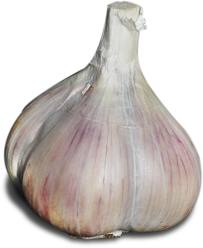
Circuit done, I honed in on buying one of each type of garlic, and remembered to bring paper bags and a marker so I could label them properly.  Like who knew? there was such a variety of garlic to be used for cooking, or roasting, or eating raw.  

So why do I like garlic?  My taste for it has grown in the past decade as has my taste for stronger flavours and Chinese, Japanese and Asian-inspired cooking.  It has a bunch of reputed health benefits such as helping to reduce blood cholesterol levels and blood pressure.  Well, I'm all for that.... It also supposed to keep insects (like aphids) and fungal diseases at bay in gardens.  

Garlic also stores well.  If kept in a dry, not sunny, not too hot spot, it can last for months.  Last year's batch lasted well into February.  It flavoured all of last year's August pesto batches.  

It took me awhile to figure out the differences in garlic.  Some quick facts I've found thanks to Railway Creek Farms in Madoc, Ontario, and their site that publishes a complete guide to organic garlic, like... 
* Garlic originated in central Asia, where they have cold winters and damp springs. 
* There are 600 varieties in the world (unsure how many types are grown in Canada). 
* The garlic species is divided into "hardnecks" and "softnecks".  Hardnecks are favoured by northern growers while softnecks are better for warmer climates. 
* Garlic 'scapes' are the plant at the top of the garlic.  In recent years, growers are harvesting these separately from the garlic.  Their mild taste makes them perfectly suited for stir frys and salads.
* Elephant garlic is very popular but is actually most closely related to the leek family.  

Hardneck Garlic:

* Got its name from the stiff stalks or neck of the plants.  It tends to have fewer cloves, with cloves circled around a central stalk.  

* Hardneck garlic has 3 distinct varieties:  Rocamboles (thinner skins, peels easily), Purple striped (distinctive stripes; can be mild to pungent tasting) and Porcelain (plump bulb and a few fat cloves with a thick outer skin).  


Softneck Garlic:

* Stores and travels better than hardneck garlic. 

* Two types are Artichoke (most commonly grown commercial garlic because it stores well) and Silverskin (silvery, white skins with many small cloves, stronger flavour).  (I didn't  find any silverskin.)


Here's a rundown of my new inventory of garlic.  I bought a range of garlic (1-2 each) from the varieties offered at the Garlic Festival.  


Rocamboles Variety 
Spanish Roja

Spanish Roja:  Hot, with a distinct strong flavour and a lingering sweetness.  Can be eaten raw, has a pleasant bite and is easy to peel.  An award-winner.  

Hungarian:  Very hot with a lingering strong flavour.  Very good for cooking.


Killarney
Killarney:  Its origin is unknown but it is thought to have come from either Spanish Roja or German Red garlic.  It is medium sizes, with a strong flavour, hot and spicy.  It can have up to 8 or 9 easy-to-peel cloves.  

Russian Red 
Russian Red:  Strong garlic flavour and a warm, sweet aftertaste.  Well known in Ontario and also in BC, where it was introduced by Doukhobor immigrants from Russia in the early 1990s.  It is considered by many as the best tasting of all garlics, with a thin skin and usually 7-9 cloves per bulb.  Garlicky when eaten raw, usually used in cooking as it holds it flavour.  

Italian:  Garlicky with a lingering aftertaste.  Works well rubbed on toasted bread and garlic butters.  Cooks suggest it be added at the end of cooking to preserve the flavour.

Korean:  Mild garlic flavour when cooked and with a nice large size.  

Railway Creek Garlic:  A mild garlic with a sweet aftertaste.  Good on salads and light cooking.  Guides suggests it be added at the end of the cooking time to retains its crunch and rawness.  

Yugoslavian

Yugoslavian:  Very distinctive, with copper veined and purple blotched bulbs.  It has a strong garlic aroma, initially hot and spicy but not overwhelming and then mellowing to a warm pleasant, sweet aftertaste.  Averages 9 to 14 cloves per bulb.  


Purple Stripe Variety
Persian Star

Czechoslovakian:  Rated the 'hottest' garlic at the Carp Garlic Festival a few years ago, this garlic has a bold, garlic flavour.

Persian Star:  This garlic is an endangered heritage garlic, and hard to find.  It has a mild, spicy zing.  

Porcelain Strain Variety

Mennonite
Mennonite: Strong, robust flavour that lasts for months, with large bulbs. Great for roasting but can also be eaten raw. It is becoming very popular among garlic growers and consumers.

German: Very similar to Mennonite.

Siberian:  Medium to strong flavour, 7-9 cloves per bulb.


Music Garlic

Armenian:   A large-cloved garlic that averages 4 cloves per bulb.

Music:  This hardy, large garlic is very popular at the Farmers' Markets around the Ottawa Region.  It is easy to grow, likes cold weather, stores for 3-6 months, is large and easy to peel.  Its flavour is mild to medium hot, with high levels of allicin, which researchers say is a powerful antioxidant.


Rosewood
Rosewood:  Not a large garlic but with a strong flavour.  It originated in Russia, produces large bulbs with 4-7 cloves per bulb.


Artichoke Variety 

Red Inchelium 
Inchelium Red:  One of the few softnecks I found.  It is among the first to harvest, has 8 to 20 gloves per bulb, and is very tasty and easy for cooking.


Red Toch
Red Toch:  This garlic originated in the Republic of Georgia in the former USSR, is a bit on the mild side and with very little heat.  Bulbs tend to be large and easy to peel.  


Polish White
Polish White:  An artichoke variety that can get quite large.  Flavour is medium hot, very rich, considered almost 'buttery'.  It keeps very well and is good for cooking stews and soups. 


Friday, 3 August 2012

New Home Sweet Home Away from Home

August 2012


Wild times R me.  New job, travel, multiple  videoconference meetings, getting lost, condo hunting, did I mention getting lost and found, learning curves... that's me.  Back in Ottawa for the long weekend to catch my breath and reflect on life in Charlottetown.  


Charlottetown is lovely right now... it's enjoying a long stretch of non-stop perfect weather, cooler than Ottawa!, hours of glorious sunshine, sea breezes, and red beaches (viewed only from a plane window as I haven't had time to explore yet).  I'm sure it's not quite so lovely in January but neither is Ottawa.  One day at a time.... 


The Daniel J. MacDonald Building (at right) is where I'm spending many hours these days getting briefed up. The building is named after a WWII veteran and former Trudeau government Minister of Veteran's Affairs.  My office is on ground level (on the right in the photo just behind the Canadian flag pole) with spectacular views of the landscaping around the building.  It's an older style office but bright, big and with a large boardroom table where I can spread my stuff and try to remember the names of folks I'm meeting.  


I'm coping with the flying back and forth between Charlottetown and Ottawa.  I will NEVER like flying.  I tackle it as something to get behind me.  The minute the plane goes up, even before the seatbelt sign *dings*, I distract myself with earphones and my music on my ipad or ipod and engross myself in briefing notes.  A glass of water helps and the hour and a half flight just zips by, no drugs but, confession, they're not far away.  The small bottle of mini-dose tranqs nestled deep in my purse provides mental comfort just in case... an anxiety attack is just sooo embarrassing.
On a positive note, I have found the sea.  This was not hard given that Charlottetown is situated on an island.  The boardwalk is stunning, great for walking/ jogging or whatever.  I looked at a brand-new condo on the boardwalk by the wharf but decided I couldn't be seduced by the summertime shimmer of perfectly blue water in July.  Gazing out every day at cold white snow, no trees, frozen ocean in January... hmm.  Maybe not.  


So, instead, I concentrated my search on the street around the office.  I totally lucked into an area called Brighton Park, about an 8-minute walk from the office (in summer anyway by cutting across two parks and walking down a lovely shaded street).  The house is incredible -- worth $2-$3 M around here I'm sure. There are 3 condos and I'm renting the one upstairs with a majestic upstairs porch that sweeps around the side of the house.  
The picture (left) shows the front of the house and the downstairs porch.  The building is designated as an historic building, and overlooks the Lieutenant's Governor's estate and with a view down to the waterfront. 


The picture (right) shows the kitchen of my upstairs unit. It's actually floors two and three, with two bedrooms and two bathrooms, and completely renovated, refurbished and furnished in exquisite detail.  I plan to ship half my spices (some of you will laugh) and a few other treasures I can't live without and then settle in to try the fall harvest of local food.  


I've also found the Farmer's Market ... hmm Saturdays and Wednesdays a.m.  Can I possibly 'book' a meeting (shhh) for an hour Wednesday mornings and scurry off to do some market shopping?  Time will tell.  


I've struck out so far on gyms -- the downtown few are small, basement-y, smelly affairs that don't do it for me.  Pilates and yoga seem big.  I'm back to swimming at the Hotel next to my office building. Absolutely no one there except me and my Speedo underwater iPod.  Technology R Me.  


Next on the hit list .... explore the beaches before the summer is over.  Red beaches.  imagine.  Biking or Walking tours anyone? Join me anytime!